
Ringworm Infection: Causes, Symptoms, Types, Diagnosis, Treatment, and Prevention
Article Sidebar
Main Article Content
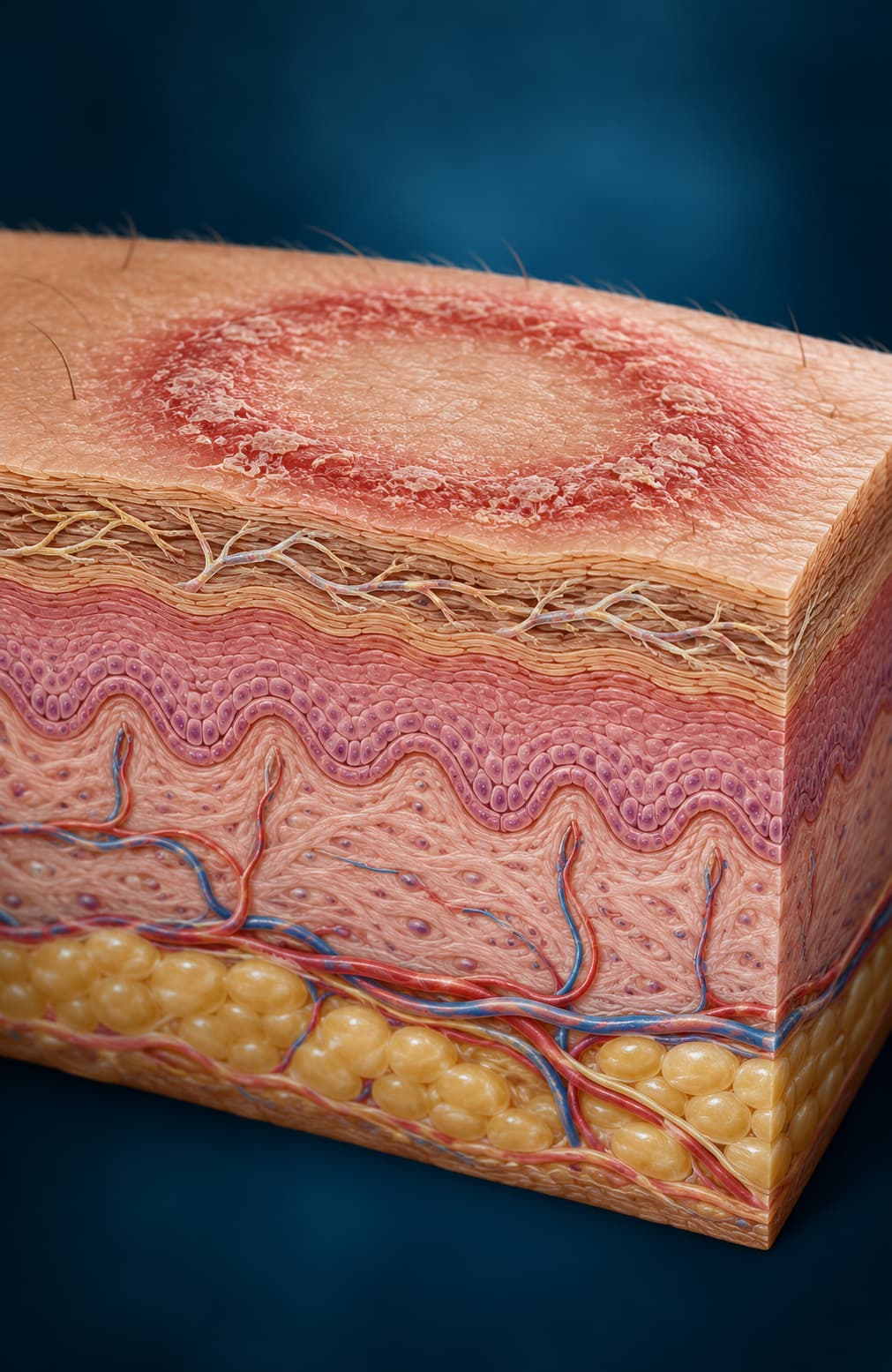
Ringworm is a common fungal infection that affects the skin, scalp, feet, groin, and sometimes the nails. Despite its name, it is not caused by a worm. It often produces an itchy, scaly rash that may form a ring-shaped pattern. Ringworm spreads through contact with infected people, animals, or contaminated objects. Most skin infections respond well to antifungal creams, but scalp and nail infections usually need different treatment. Some newer types of ringworm are harder to treat because they resist common medicines. Early diagnosis, proper treatment, good hygiene, and avoiding shared personal items can help control infection and prevent its spread.
Cite as: Ringworm Infection: Causes, Symptoms, Types, Diagnosis, Treatment, and Prevention. Brisbane (AU): Exon Publications; 2024 Jul 15 [updated 2026 Oct 17].
Introduction
Ringworm, also called tinea or dermatophytosis, is one of the most common fungal infections worldwide. It can affect people of all ages and occurs in every part of the world. Most infections are mild and respond well to treatment, but some spread to other areas or become difficult to control. Understanding where ringworm develops, how to recognize it, and how it is treated can help prevent complications and reduce its spread to others (1).
What Causes Ringworm Infection?
Ringworm is caused by a group of fungi called dermatophytes. These fungi feed on keratin, a protein found in the outer layer of the skin, hair, and nails. They usually remain in these outer tissues rather than spreading deep into the body (1, 2).
The main groups of dermatophytes that cause ringworm are Trichophyton, Microsporum, and Epidermophyton. Different species can infect different parts of the body.
The fungi grow well in warm, moist environments. Sweating, damp clothing, and skin folds can create conditions that allow them to multiply. However, ringworm can also develop on dry, exposed skin after contact with an infected person or animal.
Ringworm is not caused by poor hygiene alone. Anyone can become infected when the fungus reaches the skin and finds suitable conditions to grow.
What Are the Different Types of Ringworm?
Ringworm is classified according to the part of the body affected. The medical name usually begins with the word tinea, followed by a term describing the location (1-3).
Ringworm of the body (tinea corporis): This form affects the arms, legs, trunk, or other areas of the body. It often causes round or oval patches with a scaly, raised edge.
Ringworm of the scalp (tinea capitis): This infection affects the scalp and hair shafts. It occurs mainly in children and may cause scaling, broken hairs, or patches of hair loss.
Athlete's foot (tinea pedis): This form usually affects the skin between the toes or the soles of the feet. It can cause itching, peeling, cracking, and sometimes blisters.

Jock itch (tinea cruris): This infection affects the groin and nearby inner thighs. It commonly produces an itchy, scaly rash in areas where moisture and friction occur.
Fungal nail infection (tinea unguium): Dermatophytes can infect fingernails or toenails, causing them to become thick, discolored, brittle, or distorted. The broader term onychomycosis refers to fungal nail infections, which can also be caused by fungi other than dermatophytes.
These forms share a fungal cause but may look different and require different treatments.
How Does Ringworm Spread?
Ringworm spreads when dermatophyte fungi move from an infected source to another person's skin, hair, or nails. This can happen through direct contact or contaminated objects (1, 2).
Person-to-person contact: Touching the affected skin of someone with ringworm can spread the fungus. Close-contact sports, such as wrestling, may increase exposure.
Animal-to-person contact: Cats, dogs, and some farm animals can carry dermatophytes. An infected animal may have patches of missing fur or scaly skin, although some animals show few signs of infection.
Contaminated objects and surfaces: Towels, clothing, bedding, hairbrushes, combs, and shared sports equipment can carry fungal material. Walking barefoot in communal showers or changing rooms can also increase exposure.
A person may spread the infection to another area of their own body by scratching the rash and then touching unaffected skin.
Ringworm is contagious, but exposure does not always lead to infection. The condition of the skin, the amount of fungus transferred, and the body's defenses all influence whether an infection develops.
What Are the Signs and Symptoms of Ringworm?
The appearance of ringworm depends on the location of the infection and the person's skin tone. A typical body rash begins as a small, scaly patch that slowly expands outward. The outer edge may become raised while the center looks less affected, producing a ring-like shape (1, 2).
The rash may look red or pink on lighter skin and brown, gray, or darker than the surrounding skin on darker skin. Not all ringworm infections form a clear ring.
Itching is common, but the amount of discomfort varies. Some people have only mild scaling, while others develop more noticeable irritation.
Ringworm affecting the feet may cause white, softened skin between the toes, painful cracks, or peeling soles. Groin infections often produce itching and an expanding rash along the inner thighs.
Scalp ringworm may cause dandruff-like scaling, broken hairs, or areas of hair loss. In more severe cases, a painful, swollen area containing pus may develop. This is called a kerion and can sometimes lead to permanent scarring and hair loss if not treated promptly (3).
Who Is More Likely to Develop Ringworm?
Anyone can develop ringworm, but certain conditions increase the chance of infection (1, 2).
People who sweat heavily, wear tight or damp clothing, or spend time in hot and humid environments may be more likely to develop fungal skin infections.
Athletes, people who use shared changing rooms, and those who have close contact with infected animals face additional exposure.
Children are particularly prone to scalp ringworm because the infection spreads readily through close contact and shared personal items.
People with weakened immune systems may develop more extensive or persistent infections. Some individuals living with type 2 diabetes are also more vulnerable to certain fungal infections, particularly those affecting the feet and nails.
The risk depends on both exposure to the fungus and the body's ability to control the infection.
How Is Ringworm Diagnosed?
A healthcare professional may suspect ringworm after examining the rash, scalp, or nails. However, several other conditions, including eczema and psoriasis, can look similar (1, 2).
To confirm the diagnosis, a small sample of skin scales, hair, or nail material may be collected.
Microscopic examination: The sample may be treated with potassium hydroxide (KOH), a solution that helps reveal fungal structures under a microscope.
Fungal culture: The sample is placed in a laboratory medium that allows fungi to grow. This can help identify the fungus, although results may take several weeks.
Molecular testing: Some laboratories use tests that detect fungal genetic material. These tests may help identify particular species, especially when an unusual or treatment-resistant infection is suspected.
Testing is particularly useful when the diagnosis is uncertain, the scalp or nails are affected, or treatment has not worked as expected.
How Is Ringworm Treated?
Most mild ringworm infections of the body, groin, and feet can be treated with antifungal medicines applied directly to the affected skin. The aim is to kill the fungus or stop it from growing (1, 4).
Common treatments include terbinafine, clotrimazole, and miconazole. Depending on the medicine and location of the infection, treatment may continue for approximately one to four weeks or longer. The exact instructions vary between products.
Antifungal creams should be applied as directed, usually to the affected area and a small amount of surrounding skin. Completing the recommended course helps reduce the chance that the infection will remain active.
Keeping the affected area clean and dry supports recovery. Clothing or footwear that traps moisture should be changed regularly.
For extensive infections, infections that keep returning, or those that do not respond to skin treatments, a clinician may prescribe antifungal medicine taken by mouth.
Steroid creams should not be used alone to treat ringworm. Steroids can reduce redness temporarily while allowing the fungus to spread. Combination creams containing a steroid and an antifungal should also generally be avoided unless specifically prescribed for an appropriate reason.
How Are Scalp and Nail Ringworm Treated?
Ringworm affecting the scalp or nails usually needs a different approach because creams do not reach the fungus effectively in these tissues (1, 3, 5).
Scalp ringworm: Prescription antifungal tablets or liquid medicines, such as terbinafine or griseofulvin, are usually required for several weeks. The choice depends partly on the fungal species, the person's age, and local medicine availability.
Antifungal shampoos may be recommended alongside oral treatment to reduce fungal shedding and transmission. Shampoo alone is not enough to cure scalp ringworm.
Nail ringworm: Treatment often requires prescription antifungal tablets, such as terbinafine. Some mild nail infections may be treated with special antifungal solutions or nail preparations, although these generally work less well than oral treatment.
Fingernails and toenails grow slowly. Even after the fungus has been controlled, it can take many months for a healthy nail to replace the damaged portion.
Because nail changes can have several causes, confirming a fungal infection before starting oral treatment is especially important.
Can Ringworm Become Resistant to Treatment?
Yes. Some dermatophyte fungi have developed resistance to antifungal medicines. This means that a medicine that usually kills or controls the fungus may no longer work well (1, 6).
One emerging species, Trichophyton indotineae, has caused difficult-to-treat skin infections in several parts of the world. Some strains are resistant to terbinafine, a commonly used antifungal medicine.
These infections may cause large, widespread, or intensely inflamed rashes. They can continue spreading despite treatment.
Another emerging concern involves certain strains of Trichophyton rubrum that have become resistant to terbinafine. Some other newly recognized types of ringworm can spread through intimate skin contact.
Drug-resistant ringworm remains different from the ordinary mild infections that most people experience. It should not be assumed that every persistent rash is caused by a resistant fungus.
When resistance is suspected, specialized laboratory testing may be needed. A clinician may choose another antifungal medicine, such as itraconazole, based on the likely organism, test results, and individual circumstances.
Using antifungal medicines correctly and avoiding unnecessary steroid-containing creams helps reduce treatment problems.
Can Ringworm Cause Complications?
Most ringworm infections affect only the outer tissues and do not cause serious health problems. However, untreated or severe infections can sometimes lead to complications (1-3).
Scratching may damage the skin and allow bacteria to enter, causing a secondary bacterial infection.
Severe scalp ringworm can produce painful inflammation and may leave permanent areas of hair loss if scarring develops.
Fungal nail infections can cause thickened nails that become uncomfortable when walking or wearing shoes. In people with diabetes or poor foot sensation, damaged skin around the feet deserves particular attention.
Persistent ringworm can also cause considerable itching, sleep disturbance, and embarrassment, especially when visible areas of the body are affected.
Prompt treatment helps reduce these problems.
How Can Ringworm Be Prevented?
Preventing ringworm involves limiting contact with the fungi and keeping the skin in conditions that discourage fungal growth (1, 2).
The following measures can help:
- Keep the skin clean and dry, particularly between the toes and in skin folds.
- Change sweaty clothing, socks, and underwear regularly.
- Wear sandals or protective footwear in shared showers, swimming-pool changing rooms, and locker rooms.
- Avoid sharing towels, hairbrushes, combs, hats, clothing, or personal grooming items.
- Wash hands after touching an infected rash or handling an animal suspected of having ringworm.
- Clean shared sports equipment and other surfaces that may carry fungal material.
- Wash clothing, towels, and bedding that have been in contact with infected skin, following appropriate fabric-care instructions.
If a pet appears to have ringworm, veterinary assessment and treatment may be necessary. Otherwise, the animal may continue spreading the fungus within the household.
People with scalp ringworm may also need advice about reducing transmission at home or school.
Can Ringworm Return After Treatment?
Yes. Ringworm can return after successful treatment, particularly if a person is exposed to the fungus again or if the original infection was not completely cleared (1, 2).
Repeated infections may occur when fungal material remains in footwear, shared objects, or the home environment. An untreated infection in another body area can also act as a source of reinfection.
For example, fungal nail infection may continue to supply fungi to the surrounding skin, contributing to repeated athlete's foot.
Identifying and treating the source of infection is important when ringworm keeps returning.
When Should Someone Seek Medical Attention for Ringworm?
Medical evaluation is especially important when ringworm affects the scalp, nails, or extensive areas of the skin, or when the diagnosis is uncertain (1, 3, 6).
An examination is also advisable when a rash spreads rapidly, becomes painful, produces pus, or does not improve after an appropriate course of antifungal treatment.
People with diabetes, poor circulation, or weakened immune systems should seek assessment for persistent or worsening fungal infections, particularly those affecting the feet.
A severely inflamed scalp lesion or patchy hair loss in a child should be assessed promptly because delayed treatment may increase the risk of scarring.
A rash that continues despite appropriate treatment may require laboratory testing to confirm the diagnosis and identify possible antifungal resistance.
Conclusion
Ringworm is a common and contagious fungal infection that can affect several parts of the body. Most skin infections are mild and respond well to antifungal creams, while scalp and nail infections often require prescription treatment. Although some emerging fungal strains are resistant to common medicines, most ringworm infections can be successfully managed. Recognizing symptoms early, choosing the correct treatment, and reducing contact with infected people, animals, and objects can help prevent complications and repeated infections.
Explore Other Articles in the Public Education Series
References
- Caplan AS, Gold JAW, Smith DJ, Ely JW. Diagnosis and management of tinea infections. Am Fam Physician. 2025;112(4):382-392. https://www.aafp.org/afp/2025/1000/tinea-infections
- Leung AKC, Lam JM, Leong KF, Hon KL. Tinea corporis: an updated review. Drugs Context. 2020;9:2020-5-6. https://doi.org/10.7573/dic.2020-5-6
- Gupta AK, Polla Ravi S, Wang T, Faour S, Bamimore MA, Heath CR, et al. An update on tinea capitis in children. Pediatr Dermatol. 2024;41(6):1030-1039. https://doi.org/10.1111/pde.15708
- El-Gohary M, van Zuuren EJ, Fedorowicz Z, Burgess H, Doney L, Stuart B, et al. Topical antifungal treatments for tinea cruris and tinea corporis. Cochrane Database Syst Rev. 2014;(8). https://doi.org/10.1002/14651858.CD009992.pub2
- Gupta AK, Talukder M, Carviel JL, Cooper EA, Piguet V. Combatting antifungal resistance: Paradigm shift in the diagnosis and management of onychomycosis and dermatomycosis. J Eur Acad Dermatol Venereol. 2023;37(9):1706-1717. https://doi.org/10.1111/jdv.19217
- Gupta AK, Susmita, Nguyen HC, Liddy A, Talukder M, Wang T, et al. Trichophyton indotineae: Epidemiology, antifungal resistance and antifungal stewardship strategies. J Eur Acad Dermatol Venereol. 2026;40(1):29-45. https://doi.org/10.1111/jdv.20810
This article is part of the 'Public Education Series' initiative by Exon Publications.
Disclaimer: This article is for general educational purposes only and does not constitute medical advice, diagnosis, or treatment. Consult a qualified healthcare professional about personal health concerns.
Note on External Links: External links were checked and accessible when this article was published. Their content and availability may change over time and are outside the control of Exon Publications.
Downloads
Article Details

This work is licensed under a Creative Commons Attribution-NonCommercial-NoDerivatives 4.0 International License.