
Motor Neuron Diseases: Types, Symptoms, Causes, Diagnosis, Treatment, and Outlook
Article Sidebar
Main Article Content
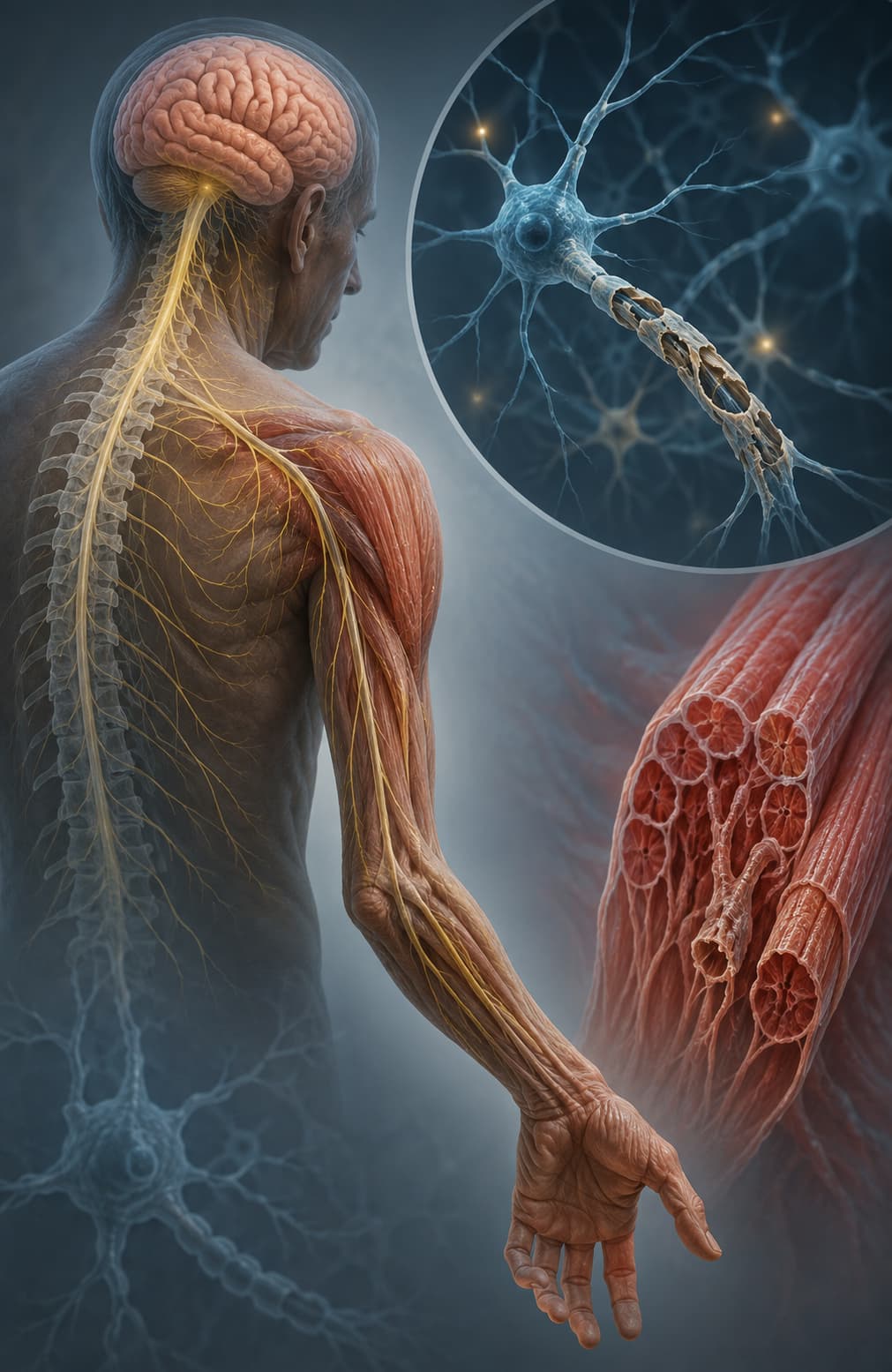
Motor neuron diseases are a group of conditions that damage the nerve cells that control voluntary muscles. These muscles allow people to walk, use their hands, speak, swallow, and breathe. Amyotrophic lateral sclerosis, or ALS, is the most common adult form. Other forms include primary lateral sclerosis, progressive muscular atrophy, and progressive bulbar palsy. Symptoms usually begin with weakness, stiffness, muscle twitching, or problems with speech or swallowing and gradually worsen. Diagnosis can take time because several other conditions cause similar symptoms. There is currently no cure for most motor neuron diseases, but treatment and specialist care can slow some forms and manage symptoms. (1, 2)
Cite as: Motor Neuron Diseases: Types, Symptoms, Causes, Diagnosis, Treatment, and Outlook. Brisbane (AU): Exon Publications; 2024 Apr 19 [updated 2026 Aug 16].
Introduction
Motor neurons are nerve cells that carry messages from the brain and spinal cord to muscles. When these cells are damaged, muscles receive fewer signals and gradually become weaker. Motor neuron diseases can affect different groups of these nerve cells and can progress at very different speeds. Some mainly cause muscle stiffness, while others cause muscle wasting and weakness. ALS affects both types of motor neurons and is the best-known form. Although these diseases cannot usually be cured, early diagnosis and coordinated care can help people remain independent for longer, manage symptoms, support breathing and nutrition, and plan ahead. (1, 2)
What Are Motor Neuron Diseases?
Motor neuron diseases are conditions in which motor neurons gradually stop working and die. Motor neurons control voluntary movement, meaning movements a person chooses to make.
There are two main groups of motor neurons:
Upper motor neurons: These begin in the brain and send signals down toward the spinal cord. Damage tends to cause stiffness, slow movement, and unusually strong reflexes. (2, 4)
Lower motor neurons: These carry signals from the brainstem or spinal cord directly to the muscles. Damage tends to cause weakness, muscle wasting, cramps, and visible muscle twitching. (2, 4)
Motor neuron diseases mainly affect movement. Touch and other senses are usually much less affected than muscle control. However, modern research has shown that ALS can affect more than movement in some people, including thinking, behavior, and emotions. (2, 3)
What Are the Main Types of Motor Neuron Disease?
The names used for motor neuron diseases can vary between countries and medical centers. Some forms also overlap, and a person's diagnosis may change as more symptoms appear over time. (2)
Amyotrophic lateral sclerosis (ALS): ALS is the most common form of adult motor neuron disease. It affects both upper and lower motor neurons. Weakness usually spreads over time and may eventually affect walking, hand use, speech, swallowing, and breathing. In some countries, especially the United Kingdom and Australia, the term motor neuron disease is often used when referring to ALS. (1, 2)
Primary lateral sclerosis (PLS): PLS mainly affects upper motor neurons. It usually causes increasing stiffness, poor balance, slow movement, and weakness. PLS generally progresses much more slowly than ALS. Early in the illness, however, it may be difficult to tell PLS from an upper-motor-neuron form of ALS. (4)
Progressive muscular atrophy (PMA): PMA mainly affects lower motor neurons. It causes increasing weakness, muscle wasting, cramps, and twitching. Some people continue to have mainly lower motor neuron disease, while others later develop signs that fit ALS. (2)
Progressive bulbar palsy: This term is used when motor neuron disease begins mainly in the muscles used for speaking, chewing, and swallowing. Speech may become unclear, and swallowing may become difficult. Many people later develop weakness elsewhere in the body, and the condition may become part of the ALS pattern. (2)
Other inherited conditions, including spinal muscular atrophy and Kennedy disease, also damage motor neurons. However, they have different genetic causes and are usually considered separately from the adult ALS-related group discussed here. (2, 3)
What Are the Early Signs of Motor Neuron Disease?
Early symptoms depend on which motor neurons are affected first. The first change may be so mild that a person does not immediately recognize it as a medical problem.
Hand and arm weakness: One hand may become weak, making it harder to turn a key, open a jar, write, or fasten buttons. A person may also begin dropping objects.
Leg and foot weakness: Weakness in a leg can cause tripping, difficulty climbing stairs, or a foot that catches on the ground.
Muscle symptoms: Other early signs can include muscle cramps, twitching under the skin, stiffness, poor balance, or unusual tiredness in a particular muscle group.
Bulbar symptoms: When the disease begins in the muscles of the mouth and throat, the first signs may be slurred speech, a weak voice, coughing during meals, or difficulty swallowing. (2, 5)
These symptoms are not specific to motor neuron disease. Many much more common conditions can cause weakness, cramps, twitching, or speech problems. Diagnosis therefore requires a careful medical assessment rather than relying on one symptom.
How Do Motor Neuron Diseases Progress?
Motor neuron diseases are progressive, meaning symptoms generally become worse over time. The pattern and speed of progression vary greatly.
Weakness that starts in one hand or leg may gradually spread to other limbs. Walking can become more difficult, and some people eventually need a walking aid or wheelchair. Weakness in the arms and hands can make dressing, eating, writing, and other daily activities harder.
When muscles controlling speech become weak, speech may become quiet or difficult to understand. Weak swallowing muscles can make eating and drinking harder and increase the risk of food or liquid entering the airway.
Weakness of the breathing muscles is particularly important in ALS. Breathing may first become difficult during sleep or when lying flat. Later, breathing support may be needed for longer periods. Regular testing can detect changes before severe breathlessness develops. (1, 2)
PLS usually progresses more slowly and mainly causes stiffness and movement problems. PMA and progressive bulbar forms have more variable courses. This is why the name of the disease alone cannot predict exactly what will happen to an individual person. (2, 4)
Does Motor Neuron Disease Cause Pain?
Motor neuron disease itself mainly damages the system controlling movement, rather than the nerves that carry pain signals. However, people can still experience pain.
Muscle cramps can be painful. Weak muscles may place extra strain on joints and other muscles. Stiffness can cause discomfort, and reduced movement can lead to pressure-related pain or painful joints. Falls and poor positioning can also contribute.
Pain should therefore not be dismissed simply because motor neuron disease is mainly a movement disorder. Medication, stretching, positioning, physical therapy, seating changes, and treatment of specific causes can often help. (1)
Does Motor Neuron Disease Affect Thinking and Memory?
Most people with motor neuron disease remain aware of what is happening around them, but ALS can affect thinking and behavior in some people.
Changes may involve planning, decision-making, language, concentration, or behavior. A smaller group develops frontotemporal dementia, a form of dementia that mainly affects behavior, personality, and language rather than causing the typical early memory problems seen in Alzheimer's disease. (2, 3)
These changes are important because they can affect communication, treatment decisions, and family relationships. Health teams may therefore assess thinking and behavior as part of ALS care.
PLS can also be associated with changes outside the motor system, although severe cognitive problems are not a defining feature of the condition. (4)
What Causes Motor Neuron Diseases?
The exact cause depends on the type of motor neuron disease. In most people with ALS, no single cause can be identified.
Research shows that ALS develops through a complex interaction of genetic changes and other biological or environmental factors. Many genes have now been linked with ALS. Changes in genes such as C9orf72, SOD1, FUS, and TARDBP are among the best studied. However, having ALS does not necessarily mean that the condition was inherited. A clear family history is present in only a minority of cases. (2, 3)
Researchers are also studying inflammation, abnormal proteins inside nerve cells, problems with energy production, damage caused by harmful molecules, and changes in the way nerve cells communicate. These processes may work together rather than there being one single cause. (3)
PLS is usually not inherited, although rare genetic forms occur. PMA may share some of the same biological causes as ALS.
Nothing a person did caused the disease in any simple or direct sense. In most cases, doctors cannot identify a particular lifestyle choice, food, injury, or event that explains why motor neurons began to fail.
Is Motor Neuron Disease Inherited?
Some motor neuron diseases have a strong genetic basis, but most people diagnosed with ALS do not report another close family member with the disease.
Genetic testing is becoming increasingly important because a disease-causing genetic change can help explain the diagnosis, provide information for relatives, and in some cases affect treatment options. Genetic counseling can help people understand what a test may or may not reveal before testing is performed. (1, 3)
This has become particularly important in ALS because treatments aimed at specific genetic changes are beginning to become available. Tofersen, for example, is a treatment for ALS caused by certain disease-causing changes in the SOD1 gene. It is not a treatment for all forms of ALS. (1)
Who Develops Motor Neuron Disease?
Motor neuron disease is uncommon. ALS usually develops in adulthood and becomes more common with increasing age, although younger adults can also develop it. Both men and women are affected. (2)
PLS is rarer than ALS and also usually begins in adulthood. Different genetic motor neuron disorders may begin in infancy, childhood, adolescence, or later life, depending on the condition. (4)
Because these diseases are uncommon and early symptoms can resemble many other conditions, people may see several health professionals before a diagnosis is reached.
How Is Motor Neuron Disease Diagnosed?
There is no single test that confirms every motor neuron disease. Diagnosis begins with the person's symptoms, medical history, and a detailed neurological examination.
The doctor looks for patterns of weakness, muscle wasting, twitching, stiffness, and abnormal reflexes. These findings help show whether upper motor neurons, lower motor neurons, or both are affected.
Electromyography (EMG) and nerve tests: EMG measures electrical activity in muscles and can show evidence that lower motor neurons are no longer supplying muscles normally. Nerve conduction tests check how electrical signals travel along nerves. These tests are especially useful when ALS is suspected. (5)
Imaging and lab tests: MRI scans of the brain or spine may be performed to look for other causes of the symptoms, such as pressure on the spinal cord, stroke, tumors, or other neurological disorders. Blood tests may identify conditions that can imitate motor neuron disease. Genetic testing may also be appropriate. (1, 2)
ALS is diagnosed from the overall pattern of progressive motor problems, clinical signs of motor neuron damage, and investigations that exclude other reasonable causes. Modern diagnostic criteria, including the Gold Coast criteria, were developed to make this process clearer and allow diagnosis earlier in the disease course. (5)
Why Can Motor Neuron Disease Be Difficult to Diagnose?
Many conditions can produce symptoms similar to motor neuron disease. A trapped nerve can cause weakness in one hand. Disease of the neck or spine can affect the arms or legs. Neuropathies, muscle diseases, vitamin deficiencies, autoimmune disorders, and other neurological conditions may also produce weakness.
Early motor neuron disease may also affect only one small area of the body. Doctors sometimes need to observe how symptoms change over time before the pattern becomes clear.
PLS creates a particular diagnostic challenge because early ALS can sometimes begin mainly with upper motor neuron signs. Current criteria therefore take the length of time a person has had symptoms into account when doctors assess whether PLS is the most likely diagnosis. (4)
The need to exclude treatable conditions is one reason why specialist neurological assessment is important.
Can Motor Neuron Disease Be Cured?
There is currently no cure for ALS, PLS, PMA, or the other main adult motor neuron disease forms. Treatment has two main aims: to slow the disease when an effective treatment is available and to manage its effects on daily life. (1)
Research has produced disease-modifying treatment for some people with ALS, and many clinical trials are investigating new approaches. Treatment research increasingly focuses on the biological and genetic differences between patients rather than assuming that every case of ALS is identical. (1, 3)
PLS usually progresses more slowly, but there is currently no medicine proven to stop its underlying progression. Treatment focuses mainly on stiffness, mobility, speech, and other symptoms. (4)
How Is ALS Treated?
Riluzole is a medicine used to slow the course of ALS. The 2024 European Academy of Neurology guideline recommends offering riluzole to people with ALS from the time of diagnosis. It does not cure ALS or restore nerve cells that have already been lost, but it can slow the disease and extend survival. (1)
Tofersen is a gene-targeted treatment for people whose ALS is caused by disease-causing changes in the SOD1 gene. Because only a small proportion of people with ALS have this genetic form, genetic testing is needed before the treatment can be considered. Availability also varies between countries. (1)
Other ALS medicines are available in some countries, and recommendations can differ between health systems because evidence and regulatory approvals change. Treatment should therefore be discussed with an ALS specialist rather than assuming that every available drug is suitable for every patient.
How Are Muscle Weakness, Stiffness, and Mobility Problems Managed?
Physical and occupational therapy can help people adapt to changing muscle strength and maintain safe movement. The aim is not to force weakened muscles to work harder, but to preserve useful movement, prevent unnecessary strain, and make everyday activities easier.
Stretching and appropriate exercise may help maintain flexibility and reduce stiffness. Medicines can be used when muscle cramps or severe stiffness become troublesome. (1)
Walking sticks, ankle supports, walkers, wheelchairs, adjustable beds, lifting equipment, and home modifications may become useful as the disease progresses. Occupational therapists can recommend equipment for eating, dressing, bathing, writing, computer use, and other daily tasks.
Introducing equipment before it becomes urgently necessary can make the transition easier and help maintain independence.
How Are Speech and Communication Problems Managed?
Weakness of the tongue, lips, throat, and breathing muscles can make speech slower, quieter, or harder to understand.
A speech therapist can assess communication early and suggest ways to conserve the person's voice. Simple strategies may be enough at first. Later, communication may be supported with writing boards, tablets, speech-generating devices, or systems controlled by small movements.
Some people choose to record their own voice while speech is still clear (voice banking). This can allow a communication device to use a voice that sounds more like their own.
Planning ahead is important because communication equipment is easier to learn while hand movement and speech are still reasonably strong. (1)
How Are Swallowing and Nutrition Problems Managed?
Weak swallowing muscles can make meals slow and tiring. Food may become difficult to chew, and liquids can sometimes enter the airway. People may also lose weight because eating requires more effort while the body's energy needs may change.
A speech therapist can assess swallowing and recommend safer food textures or swallowing techniques. A dietitian can help maintain enough calories, protein, and fluid.
When eating by mouth no longer provides enough nutrition or becomes unsafe, a feeding tube into the stomach may be considered. This is usually called a gastrostomy. A feeding tube can provide food, water, and medicines while a person may still continue to eat or drink by mouth when it is safe and comfortable. (1)
Planning gastrostomy before severe breathing weakness develops can make the procedure safer and allow the person time to consider the decision. (1)
How Are Breathing Problems Managed?
Breathing muscles can weaken in ALS even before a person feels severely short of breath. Early symptoms may include poor sleep, morning headaches, daytime sleepiness, difficulty breathing while lying flat, weak coughing, or unexplained tiredness.
Breathing tests are therefore an important part of regular follow-up.
Non-invasive ventilation (NIV) can support breathing through a mask, especially during sleep. It does not cure the disease, but it can improve symptoms and may extend survival. Cough-assist techniques and devices can help clear mucus when coughing becomes weak. (1)
Decisions about more invasive forms of ventilation are highly personal and should be discussed before an emergency develops. The person's wishes, quality of life, family situation, and goals of care all matter.
Why Is Multidisciplinary Care Important?
Motor neuron disease affects much more than muscle strength. A person may need help with mobility, communication, swallowing, breathing, nutrition, emotional health, equipment, finances, home care, and future planning.
For this reason, specialist clinics bring together different professionals. The team may include neurologists, respiratory doctors, nurses, physiotherapists, occupational therapists, speech therapists, dietitians, psychologists, social workers, palliative care specialists, and other professionals.
Studies show that multidisciplinary ALS care is associated with better survival than general neurological care alone. It also allows problems such as breathing weakness and poor nutrition to be identified and treated earlier. (1, 6)
Palliative care can also be included from an early stage. It is not limited to the final days of life. Its purpose is to relieve symptoms, support quality of life, help families, and assist with difficult decisions.
What Is the Outlook for Someone With Motor Neuron Disease?
The outlook depends strongly on the type of motor neuron disease and the individual person.
ALS usually progresses faster than PLS. Many people with ALS live for several years after symptoms begin, but survival varies widely. Some forms progress rapidly, while other people live for many years. Age, where symptoms begin, breathing function, nutrition, genetics, and the rate at which weakness spreads can all affect the course. (1, 2)
PLS usually progresses much more slowly. People may live with increasing stiffness and disability for many years. PMA also varies, and some people later develop the broader pattern of ALS. (2, 4)
Statistics describe groups of patients and cannot predict exactly how long one person will live. Regular follow-up allows the care plan to change as the disease changes.
Can People Live Independently With Motor Neuron Disease?
Many people remain independent during the earlier stages of motor neuron disease, and technology and equipment can help preserve independence as weakness increases.
A person may continue working, driving, exercising, traveling, or taking part in family and social activities for some time after diagnosis. What remains possible depends on the muscles affected and how quickly the disease progresses.
Planning ahead can help people keep control over daily life. Home modifications, mobility equipment, communication aids, transport support, workplace changes, and assistance from family or professional caregivers can all help.
Emotional support is equally important. Receiving a diagnosis of a progressive neurological disease can cause fear, grief, anxiety, anger, and uncertainty for both patients and families. Psychological support, support groups, and honest communication with the health team can make these changes easier to manage. (1)
Conclusion
Motor neuron diseases are a group of progressive disorders that damage the nerve cells controlling movement. ALS is the most common adult form, while PLS, PMA, and progressive bulbar presentations affect motor neurons in different patterns. Symptoms may include muscle weakness, wasting, stiffness, twitching, speech problems, swallowing difficulty, and breathing weakness. Diagnosis is based on the pattern of symptoms, neurological examination, tests such as EMG, and exclusion of other conditions. There is currently no cure for the main adult forms, but ALS treatments can slow disease in some people, and specialist multidisciplinary care can manage many complications. Early assessment and continued follow-up allow treatment to match each person's changing needs. (1, 2)
Explore Other Articles in the Public Education Series
- Muscular Dystrophy: Types, Symptoms, Causes, Diagnosis, Treatment, and Outlook
- Cerebral Palsy: Types, Symptoms, Causes, Diagnosis, Treatment, and Outlook
- Cerebral Palsy: Treatment and Management
- Living with Cerebral Palsy
References
- Van Damme P, Al-Chalabi A, Andersen PM, et al. European Academy of Neurology (EAN) guideline on the management of amyotrophic lateral sclerosis in collaboration with European Reference Network for Neuromuscular Diseases (ERN EURO-NMD). Eur J Neurol. 2024;31(6):e16264. https://doi.org/10.1111/ene.16264
- Feldman EL, Goutman SA, Petri S, Mazzini L, Savelieff MG, Shaw PJ, Sobue G. Amyotrophic lateral sclerosis. Lancet. 2022;400(10360):1363-1380. https://doi.org/10.1016/S0140-6736(22)01272-7
- Goutman SA, Hardiman O, Al-Chalabi A, Chió A, Savelieff MG, Kiernan MC, Feldman EL. Emerging insights into the complex genetics and pathophysiology of amyotrophic lateral sclerosis. Lancet Neurol. 2022;21(5):465-479. https://doi.org/10.1016/S1474-4422(21)00414-2
- Turner MR, Barohn RJ, Corcia P, et al. Primary lateral sclerosis: consensus diagnostic criteria. J Neurol Neurosurg Psychiatry. 2020;91(4):373-377. https://doi.org/10.1136/jnnp-2019-322541
- Turner MR. Diagnosing ALS: the Gold Coast criteria and the role of EMG. Pract Neurol. 2022;22(3):176-178. https://doi.org/10.1136/practneurol-2021-003256
- de Almeida FEO, do Carmo Santana AK, de Carvalho FO. Multidisciplinary care in amyotrophic lateral sclerosis: a systematic review and meta-analysis. Neurol Sci. 2021;42(3):911-923. https://doi.org/10.1007/s10072-020-05011-2
This article is part of the 'Public Education Series' initiative by Exon Publications.
Disclaimer: This article is for general educational purposes only and does not constitute medical advice, diagnosis, or treatment. Consult a qualified healthcare professional about personal health concerns.
Note on External Links: External links were checked and accessible when this article was published. Their content and availability may change over time and are outside the control of Exon Publications.
Downloads
Article Details

This work is licensed under a Creative Commons Attribution-NonCommercial-NoDerivatives 4.0 International License.