
Gastritis: Causes, Symptoms, Diagnosis, Treatment, and Outlook Causes, Symptoms, Treatment, and How to Manage It Long Term
Article Sidebar
Main Article Content
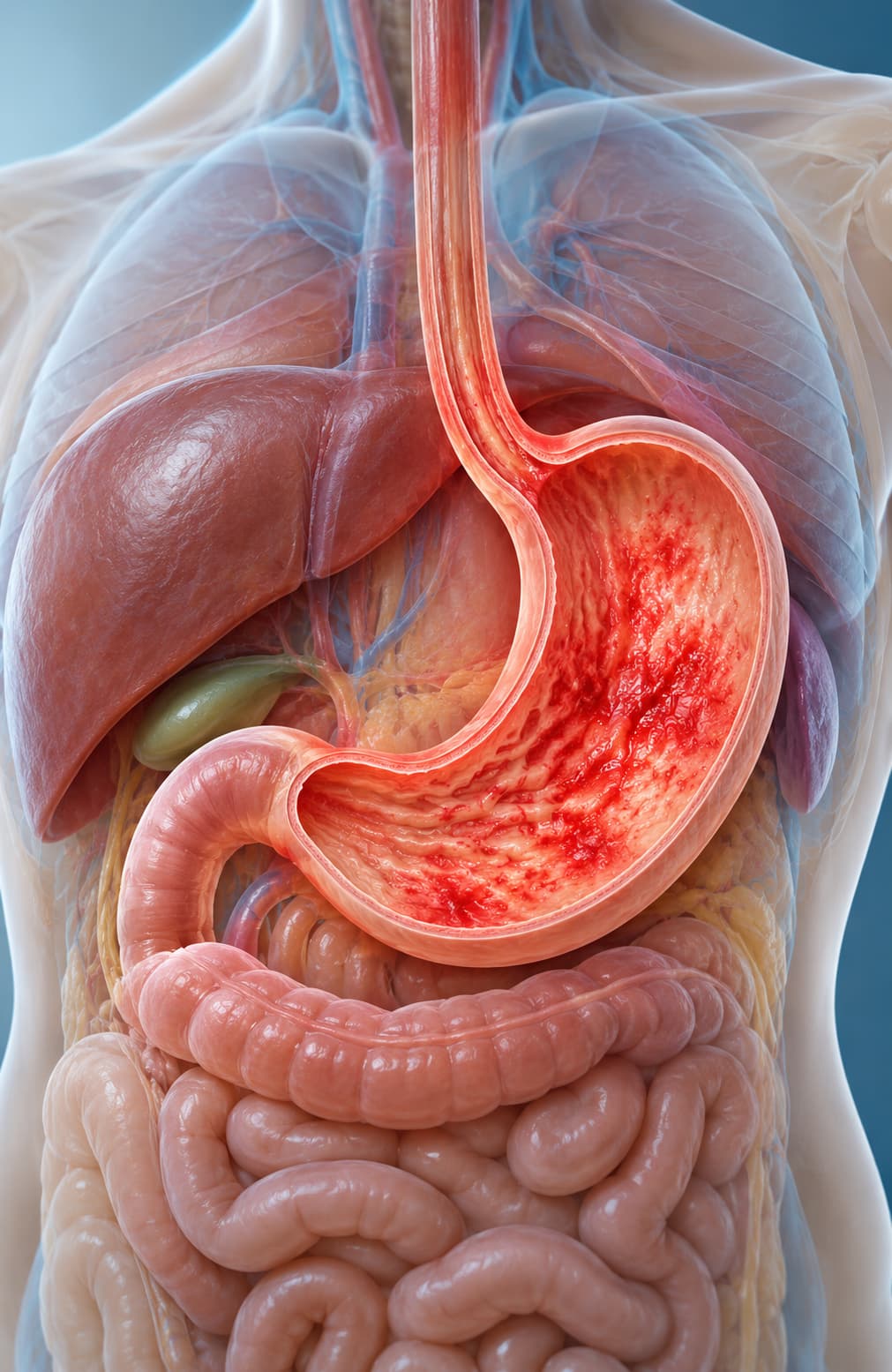
Gastritis means inflammation of the lining of the stomach. It can develop suddenly or persist for years, and many people have no symptoms. Common causes include infection with Helicobacter pylori (H. pylori), medicines such as nonsteroidal anti-inflammatory drugs, alcohol-related injury, and autoimmune disease. Symptoms may include upper abdominal pain, nausea, bloating, loss of appetite, or vomiting. Diagnosis may involve H. pylori testing, blood tests, or an upper endoscopy with biopsies. Treatment depends on the cause. H. pylori requires antibiotic treatment, while other forms may need acid-reducing medicines, stopping an offending drug, replacing vitamin deficiencies, or long-term monitoring.
Cite as: Gastritis: Causes, Symptoms, Diagnosis, Treatment, and Outlook. Brisbane (AU): Exon Publications; 2024 Jul 07 [updated 2026 Sep 24].
Introduction
Gastritis is inflammation of the stomach lining. It is not a single disease and can have several different causes. Some forms appear suddenly and heal quickly, while others develop slowly and may continue for many years. Helicobacter pylori infection and autoimmune disease are especially important causes of chronic gastritis because they can gradually damage the stomach lining. Medicines, alcohol, and severe physical illness can also injure the stomach. Treatment therefore depends on finding the underlying cause rather than simply treating stomach discomfort (1-3).
What Is Gastritis?
The inside of the stomach is covered by a protective lining called the gastric mucosa. This lining contains glands that produce stomach acid, digestive substances, mucus, and other chemicals needed for normal digestion.
Gastritis develops when this lining becomes inflamed or damaged. The inflammation may affect only part of the stomach or involve larger areas.
Gastritis is sometimes used casually to describe any burning, bloating, or indigestion. Medically, however, stomach symptoms and gastritis are not the same thing. A person can have significant gastritis without symptoms, while another person can have indigestion even though the stomach lining shows little or no inflammation (1, 3).
What Are the Main Types of Gastritis?
Gastritis can be classified in several ways, including by its cause and how long it lasts.
Acute gastritis develops suddenly. It may follow irritation from medicines, alcohol, infection, or severe physical illness. The stomach lining can often recover when the cause is removed.
Chronic gastritis persists over a longer period. H. pylori infection is one of the most important causes worldwide. Autoimmune gastritis is another major chronic form (1, 3).
Erosive gastritis involves surface injury to the stomach lining. Erosions can sometimes bleed.
Atrophic gastritis develops when long-standing inflammation causes loss of normal stomach glands. It is most commonly associated with chronic H. pylori infection or autoimmune gastritis. Atrophic gastritis is important because advanced forms increase the risk of certain stomach cancers (3, 5, 6).
These categories can overlap. For example, chronic H. pylori gastritis may eventually become atrophic gastritis.
What Causes Gastritis?
The cause determines both the treatment and the long-term importance of gastritis.
Major causes include:
Helicobacter pylori infection: H. pylori is a bacterium that can live in the stomach lining for many years. It is one of the most important causes of chronic gastritis worldwide (2, 3).
Nonsteroidal anti-inflammatory drugs: Medicines such as aspirin, ibuprofen, naproxen, and related drugs can weaken the stomach's protective mechanisms and contribute to erosions, ulcers, and bleeding.
Autoimmune disease: In autoimmune gastritis, the immune system attacks specialized cells in the stomach lining. Over time, this can interfere with stomach acid production and vitamin B12 absorption (4, 5).
Alcohol: Heavy alcohol exposure can irritate and damage the stomach lining, particularly when combined with other risk factors.
Severe physical stress: Critical illness, major burns, serious injury, or major surgery can sometimes cause acute stress-related injury to the stomach lining. This is different from ordinary emotional stress.
Less common causes include certain infections, radiation, bile-related chemical injury, and some other inflammatory diseases (1, 3).
What Is H. pylori Gastritis?
H. pylori is a spiral-shaped bacterium adapted to survive in the stomach. Infection causes chronic inflammation of the stomach lining and can remain present for decades unless it is treated (2, 3).
Many people with H. pylori have no symptoms. Others develop upper abdominal discomfort, ulcers, or other stomach problems.
Long-standing infection can gradually alter the stomach lining. In some people, chronic inflammation progresses to loss of normal stomach glands, called atrophy, and then to intestinal metaplasia, in which stomach cells are replaced by cells that resemble those normally found in the intestine.
H. pylori infection is an established cause of stomach cancer and gastric mucosa-associated lymphoid tissue lymphoma. Treating the infection reduces these risks, although people who already have advanced atrophy or intestinal metaplasia may continue to require follow-up (2, 3, 6).
How Do Anti-Inflammatory Medicines Affect the Stomach?
Nonsteroidal anti-inflammatory drugs (NSAIDs) include commonly used medicines such as ibuprofen, naproxen, and aspirin.
These medicines reduce substances called prostaglandins. Prostaglandins contribute to pain and inflammation, but they also help protect the stomach by supporting mucus production, blood flow, and repair of the stomach lining.
Reducing these protective effects can make the stomach more vulnerable to injury. Some people develop erosions or ulcers and, in more serious cases, gastrointestinal bleeding.
Risk is greater with higher doses, longer treatment, older age, previous ulcers, the use of several medicines that increase bleeding risk, and simultaneous H. pylori infection.
A person taking an NSAID should not simply stop an important prescribed medicine without medical advice. Depending on the circumstances, the dose may be changed, another medicine may be used, or an acid-suppressing medicine may be added.
What Is Autoimmune Gastritis?
Autoimmune gastritis occurs when the immune system mistakenly attacks parietal cells in the stomach. These cells normally make stomach acid and intrinsic factor, a protein needed for the absorption of vitamin B12 (4, 5).
As parietal cells are gradually lost, stomach acid levels fall. Iron absorption can be affected, and iron deficiency may sometimes appear before vitamin B12 deficiency.
Later in the disease, lack of intrinsic factor can cause severe vitamin B12 deficiency. When this produces the characteristic form of anemia, it is called pernicious anemia.
Autoimmune gastritis is also associated with other autoimmune conditions, particularly autoimmune thyroid disease.
Long-standing autoimmune gastritis increases the risk of stomach adenocarcinoma and a particular type of gastric neuroendocrine tumor. People with established autoimmune atrophic gastritis may therefore require endoscopic monitoring based on their individual risk (4-6).
What Are the Symptoms of Gastritis?
Many people with gastritis have no symptoms. When symptoms occur, they are not specific enough to prove that gastritis is present.
Possible symptoms include:
- burning, aching, or discomfort in the upper abdomen
- nausea
- vomiting
- bloating
- early fullness during a meal
- feeling unusually full after eating
- loss of appetite
- indigestion
Erosive gastritis can sometimes cause bleeding. Blood loss may be obvious or may occur slowly without being noticed.
Chronic atrophic or autoimmune gastritis may eventually cause symptoms related to iron or vitamin B12 deficiency, including tiredness, weakness, or anemia (1, 4).
Is Gastritis the Same as Acid Reflux or an Ulcer?
No. These conditions can cause similar symptoms, but they are different.
Gastritis is inflammation of the stomach lining.
Gastroesophageal reflux disease, or GERD, occurs when stomach contents repeatedly flow backward into the esophagus. Heartburn and acid regurgitation are common symptoms.
A peptic ulcer is a deeper open sore in the lining of the stomach or the first part of the small intestine. H. pylori infection and NSAIDs are major causes of peptic ulcers.
A person can have more than one of these conditions at the same time. Symptoms alone may not reliably distinguish them.
How Is Gastritis Diagnosed?
Diagnosis depends on the symptoms, medical history, suspected cause, and whether there are features that suggest a more serious problem.
A clinician may ask about NSAID use, alcohol intake, previous ulcers, family history, autoimmune disease, anemia, and symptoms such as bleeding or unexplained weight loss.
H. pylori can often be investigated without an endoscopy using a urea breath test or stool antigen test.
Blood tests may be used to look for anemia, iron deficiency, vitamin B12 deficiency, or other abnormalities. When autoimmune gastritis is suspected, tests for antibodies associated with the condition may also be useful.
An upper endoscopy, also called gastroscopy, allows a doctor to look directly at the esophagus, stomach, and first part of the small intestine. Small tissue samples called biopsies can be taken from different areas of the stomach.
Biopsy examination is particularly important for confirming chronic atrophic gastritis, identifying intestinal metaplasia, diagnosing autoimmune patterns, assessing H. pylori-associated changes, and evaluating suspicious lesions (1, 3, 5, 6).
How Is H. pylori Infection Tested?
Several tests can detect H. pylori.
Urea breath test: The person swallows a substance containing urea. If H. pylori is present, bacterial enzymes break it down and produce carbon dioxide that can be detected in the breath.
Stool antigen test: This detects H. pylori material in a stool sample.
Biopsy testing: If an endoscopy is being performed, stomach biopsies can be tested for H. pylori.
Certain medicines can temporarily suppress H. pylori and produce a false-negative test. The timing of proton pump inhibitors, antibiotics, and bismuth medicines therefore needs to be considered before testing.
Testing is also important after treatment. Current guidance recommends confirming that H. pylori has been eradicated rather than assuming that antibiotic treatment worked (2).
How Is Gastritis Treated?
There is no single treatment for all gastritis. Treatment should address the cause.
H. pylori gastritis: H. pylori is treated with a combination of antibiotics and acid-suppressing treatment. The exact regimen depends on factors including previous antibiotic exposure, resistance patterns, allergies, and which medicines are available locally. Because antibiotic resistance has increased, treatment should follow current local or national guidance rather than relying on older standard combinations (2).
After treatment, eradication should be confirmed with an appropriate test (2).
NSAID-related injury: When possible, the offending medicine may be reduced, stopped, or replaced. Acid-suppressing medicines may be used to help the stomach lining heal or to protect people who need continued NSAID therapy.
Alcohol-related injury: Reducing or avoiding alcohol allows the stomach lining to recover and prevents further irritation.
Autoimmune gastritis: There is currently no routine treatment that reverses the autoimmune destruction of parietal cells. Management focuses on identifying and replacing iron or vitamin B12 when needed and monitoring people who have significant atrophy or increased cancer risk (4-6).
Acid-suppressing medicines: Proton pump inhibitors and related medicines reduce stomach acid and can help heal acid-related or erosive injury. They may relieve symptoms, but acid suppression does not eliminate H. pylori or reverse autoimmune gastritis.
Do Diet and Lifestyle Changes Cure Gastritis?
There is no single "gastritis diet" that cures all forms of the condition.
Food does not eradicate H. pylori, reverse autoimmune gastritis, or replace treatment for bleeding or other complications.
However, particular foods or drinks can worsen symptoms in some people. Alcohol can directly irritate the stomach lining and is best limited or avoided when it is contributing to gastritis. Some people also find that very large meals, spicy foods, coffee, or other foods worsen discomfort, while others tolerate them without difficulty.
There is usually no need to remove broad groups of foods unless they repeatedly cause symptoms or there is another medical reason to avoid them.
Smoking can also contribute to gastrointestinal disease and may interfere with healing.
Lifestyle changes are therefore useful for reducing avoidable irritation and managing symptoms, but treatment of the underlying cause remains the priority.
Can Emotional Stress Cause Gastritis?
Ordinary emotional stress and medically defined stress-related gastritis are not the same thing.
Severe physical stress from critical illness, major trauma, extensive burns, or major surgery can damage the stomach lining and cause stress-related mucosal disease.
Emotional stress may make indigestion, abdominal discomfort, nausea, or other gastrointestinal symptoms feel worse. However, it should not automatically be assumed to be the cause of true inflammatory gastritis.
Persistent symptoms still need to be considered in the context of H. pylori infection, medicines, ulcers, reflux, functional indigestion, and other possible causes.
What Complications Can Gastritis Cause?
Most gastritis does not lead to serious complications, particularly when the cause is identified and treated.
Possible complications include:
Bleeding: Erosive injury can damage blood vessels in the stomach. Significant bleeding may cause vomiting of blood, vomit that resembles coffee grounds, black tarry stools, dizziness, or weakness.
Peptic ulcers: H. pylori infection and NSAIDs can contribute both to gastritis and to deeper ulcer formation.
Iron deficiency: Chronic blood loss or changes in stomach function can lead to iron deficiency and anemia.
Vitamin B12 deficiency: Autoimmune gastritis can eventually prevent normal vitamin B12 absorption and cause pernicious anemia.
Atrophy and intestinal metaplasia: Long-standing inflammation can change the structure of the stomach lining.
Stomach cancer: Some forms of chronic atrophic gastritis increase the risk of gastric adenocarcinoma.
Gastric neuroendocrine tumors: Autoimmune atrophic gastritis is associated with increased risk of certain gastric neuroendocrine tumors (4-6).
Does Gastritis Increase the Risk of Stomach Cancer?
Most people with simple short-term gastritis will not develop stomach cancer.
Cancer risk is mainly associated with particular forms of long-standing gastritis, especially advanced atrophic gastritis caused by H. pylori infection or autoimmunity (3, 5, 6).
Chronic H. pylori infection can produce a gradual sequence of inflammation, gland loss, intestinal metaplasia, precancerous changes, and eventually cancer in a minority of infected people.
Eradicating H. pylori is an important cancer-prevention measure. However, once advanced atrophy or intestinal metaplasia has developed, some increased risk may remain even after the bacterium has been eliminated.
Current guidelines therefore recommend risk-based endoscopic surveillance for selected people with advanced gastric premalignant changes rather than routine surveillance for everyone who has ever had gastritis (6).
What Is the Outlook for People With Gastritis?
The outlook depends largely on the cause.
Acute irritation from a medicine, alcohol, or another temporary trigger can often improve once the cause is removed.
H. pylori gastritis can usually be cured when treatment successfully eradicates the infection, although existing atrophic changes may not completely reverse.
People with autoimmune gastritis generally have a long-term condition. They may need periodic monitoring of iron and vitamin B12 and, in selected cases, endoscopic surveillance.
The most important step is therefore not simply suppressing stomach acid. Identifying whether gastritis is caused by H. pylori, autoimmune disease, medication-related injury, or another process allows treatment and follow-up to be matched to the actual problem.
Conclusion
Gastritis is inflammation of the stomach lining and can have several different causes. H. pylori infection, NSAID use, alcohol-related injury, and autoimmune gastritis are among the most important. Some people have upper abdominal pain, nausea, bloating, or loss of appetite, while others have no symptoms. H. pylori testing and, when appropriate, endoscopy with biopsies help establish the cause. Treatment may involve antibiotics, acid suppression, changing medicines, avoiding irritants, or replacing iron and vitamin B12. Most cases can be managed successfully. Long-standing atrophic gastritis requires greater attention because it can increase the risk of vitamin deficiencies and certain stomach cancers.
References
- Fansiwala K, Lewis MS, Pisegna JR. Gastritis: pathophysiology and clinical management. Am J Gastroenterol. 2025;120(1):5-8. https://doi.org/10.14309/ajg.0000000000003216
- Chey WD, Howden CW, Moss SF, et al. ACG clinical guideline: treatment of Helicobacter pylori infection. Am J Gastroenterol. 2024;119(9):1730-1753. https://doi.org/10.14309/ajg.0000000000002968
- Rugge M, Genta RM, Malfertheiner P, et al. RE.GA.IN.: the Real-world Gastritis Initiative-updating the updates. Gut. 2024;73(3):407-441. https://doi.org/10.1136/gutjnl-2023-331164
- Castellana C, Eusebi LH, Dajti E, et al. Autoimmune atrophic gastritis: a clinical review. Cancers (Basel). 2024;16(7):1310. https://doi.org/10.3390/cancers16071310
- Shah SC, Piazuelo MB, Kuipers EJ, Li D. AGA clinical practice update on the diagnosis and management of atrophic gastritis: expert review. Gastroenterology. 2021;161(4):1325-1332.e7. https://doi.org/10.1053/j.gastro.2021.06.078
- Morgan DR, Corral JE, Li D, et al. ACG clinical guideline: diagnosis and management of gastric premalignant conditions. Am J Gastroenterol. 2025;120(4):709-737. https://doi.org/10.14309/ajg.0000000000003350
This article is part of the 'Public Education Series' initiative by Exon Publications.
Disclaimer: This article is for general educational purposes only and does not constitute medical advice, diagnosis, or treatment. Consult a qualified healthcare professional about personal health concerns.
Note on External Links: External links were checked and accessible when this article was published. Their content and availability may change over time and are outside the control of Exon Publications.
Downloads
Article Details

This work is licensed under a Creative Commons Attribution-NonCommercial-NoDerivatives 4.0 International License.